If in fifty years they ask
Why we did what we did
We will have to tell them
Lips pursed, eyes watering
That we preferred to live
With the rampaging disease
Because medicine, the cure
Was simply too bitter
For us to consider swallowing
Excerpt
Archived Posts from this Category
September 9, 2020
September 8, 2020
From “Of Dreamsand Books” by Thor Williamon
Posted by alexp01 under Excerpt | Tags: fiction, story |Leave a Comment
“These are the cities I have built as I slept, in my dreams,” Le Aaiun said. “My life. But when I wake for the final time, or when I sleep deeply into the final sleep from which there is no return, it shall be as nothing. A passing fancy on the wind.”
“We do not know that there is any world beyond the dreamlands, or that we are not fully awake ourselves,” replied Ad Dakhla, the scribe. “I also do not know that there is any higher wakefulness on the Dreaming Moon, beneath the gaze of perfect, immortal Vloles.”
Aaiun turned to him, her face pained. “Why would you say that? The City of Bronze is proof positive of the dreamscape.”
“I say it because the thought that everything I have dedicated my life to, and all the books I have written, will pass into nothingness when this dream ends,” said Dakhla. “I cannot believe this.”
“Why not?”
“What should I live for, then? And what are you doing, working on your own book, if you think it will crumble to sand upon your waking?”
Aaiun turned away. “Some stories have to be told,” she said. “Regardless to whom, and how. They rip their way out of you like a primal howl. It scarcely matters who hears, who remembers. All that matters, in the moment, is the telling.”
September 7, 2020
From “The Grassblade Tombs” by Skye Cionto
Posted by alexp01 under Excerpt | Tags: fiction, story |Leave a Comment
The Verdant Empire was slowly collapsing, with most of the troops being recalled to fight civil wars in the heartlands or restricted to garrisoning large cities.
But way back when, when the Empire was still expanding, their legions, the Grassblades, were known for their suicidal bravery.
“If you cut a Grassblade down, ten more will sprout in its place,” was one of their great rallying cries.
After a general conquered an area, he would divvy it up into farms for his veterans and also build a magnificent tomb complex.
Then as the veterans died they would be interred there together as an eternal army.
But with the empire fading, the dead have become restless in tombs abandoned and forgotten.
September 6, 2020
From “A Joyous Family Reunion” by Imani Flourney
Posted by alexp01 under Excerpt | Tags: fiction, story |Leave a Comment
Bai Yu, the Emperor’s chosen representative, met the ambassadors. He had devoted himself to the study of the elves’ language, so when the time came, their words fell of his tongue thickly but intelligibly.
“I am Bai Yu. Our emperor, latest in a line that stretches back over one thousand years, sends his most personal greetings,” said Bai Yu, being deeply. “I am Bai Yu, a eunuch of the Imperial household, advisor, and general.”
The elves replied, their own tongues thick. “It is said that your emperor is a direct descendent of the sun.”
Bai Yu, straightening, flicked his eyes to the trees. The elves were few in number, but they had come girded for war, with archers in advantageous places and skirmishes prepared to meet intruders in the wood, at the point when the humans’ heavy cavalry would be useless.
“I am Wystan Tathame,” the lead elf said. He was very pale, with golden hair and a hasty air.
“It is my pleasure to welcome you, Sir Wystan.”
The elf narrowed his eyes. “Who are you to address me by my personal name so familiarly, and t welcome me to my own land?”
Bai Yu’s scalp prickled with sweat. These strange creatures put their personal names first, and did not recognize the primacy of the Son of Heaven? His troops, seeing him tense, began to stir.
“You know, our high king is descended from the sun as well,” a younger elf, by the king’s side, said.
Thinking quickly, Bai Yu smiled. “Than your high king and our emperor must be cousins!”
After a moment of stone-faced deliberation, the older elf smiled to. “What a joyous family reunion this is, then.”
September 5, 2020
From “The Sunny Dyson” by Anonymous
Posted by alexp01 under Excerpt | Tags: fiction, story |Leave a Comment
You do your greatest art when the climb is at its steepest. At breakfast, you feel every extremity suffering; the only one who suspects otherwise when confronted with a sunny countenance. You’re the one used to being inside those moments, the happiness a shell. Wholly uneasy at the thought it was seen in you, or missed in someone else’s pretty Dyson sphere of a facade. This way, sir, step right up to see law of the weak: surrounded by the strong and prosperous, they dispatch false sunshine and ever so strictly produced elegance. It is your answer, and also your prison.
September 4, 2020
From “The Wojnicz Stones, Part 2” by Jon Cossin-Wetz
Posted by alexp01 under Excerpt | Tags: fiction, story |Leave a Comment
Eventually, after nearly two years’ work, the thing was finished. As per the financier’s instructions, it was unveiled quietly, on a Tuesday afternoon, with only a handful of the builders and artisans involved in its construction present.
The final result: a cluster of seven monoliths, astronomically aligned to the sun. On each of their fourteen sides, they were covered with an unknown script with paragraphs, headings, and other formatting, written boustrophedonically in alternating mirrored lines. The glyphs appear to be language, but like the much older Voynich Manuscript, they have defied analysis and decipherment.
Only one part of the complex was in English: a stone at the entrance that made up a single sentence in English–as well as sixteen other modern and ancient languages.
“When the time is right, you will be able to read me.”
September 3, 2020
From “The Wojnicz Stones, Part 1” by Jon Cossin-Wetz
Posted by alexp01 under Excerpt | Tags: fiction, story |Leave a Comment
The edifice was paid for, with cash, by an old, distinguished-looking gentleman. The financing was arranged through a local banker, the only man who knew the stranger’s real name. While the bank itself would see unprecedented prosperity in the years to come, the banker was dead of cancer inside of a year.
Working from exactin plans and a scale model given to them by the mysterious man, the best and most experienced builders in the county still took two years to complete the work. That was fine by them, since they’d quoted the old man double just to make sure he was serious, and they always finished their jobs. In the Rust Belt, without much call for their art except building fast food restaurants and carving tombstones, the builders and artisans took it as a regular holiday.
The only other person who ever saw the financier, the head of the construction company, dropped dead of a heart attack eighteen months to the day after the first ground was broken. All other comunications were by letter, with each new missive bearing a new and different return address.
September 2, 2020
From “The Pillar of Lady Mirria” by Ray Limardi
Posted by alexp01 under Excerpt | Tags: fiction, story |Leave a Comment
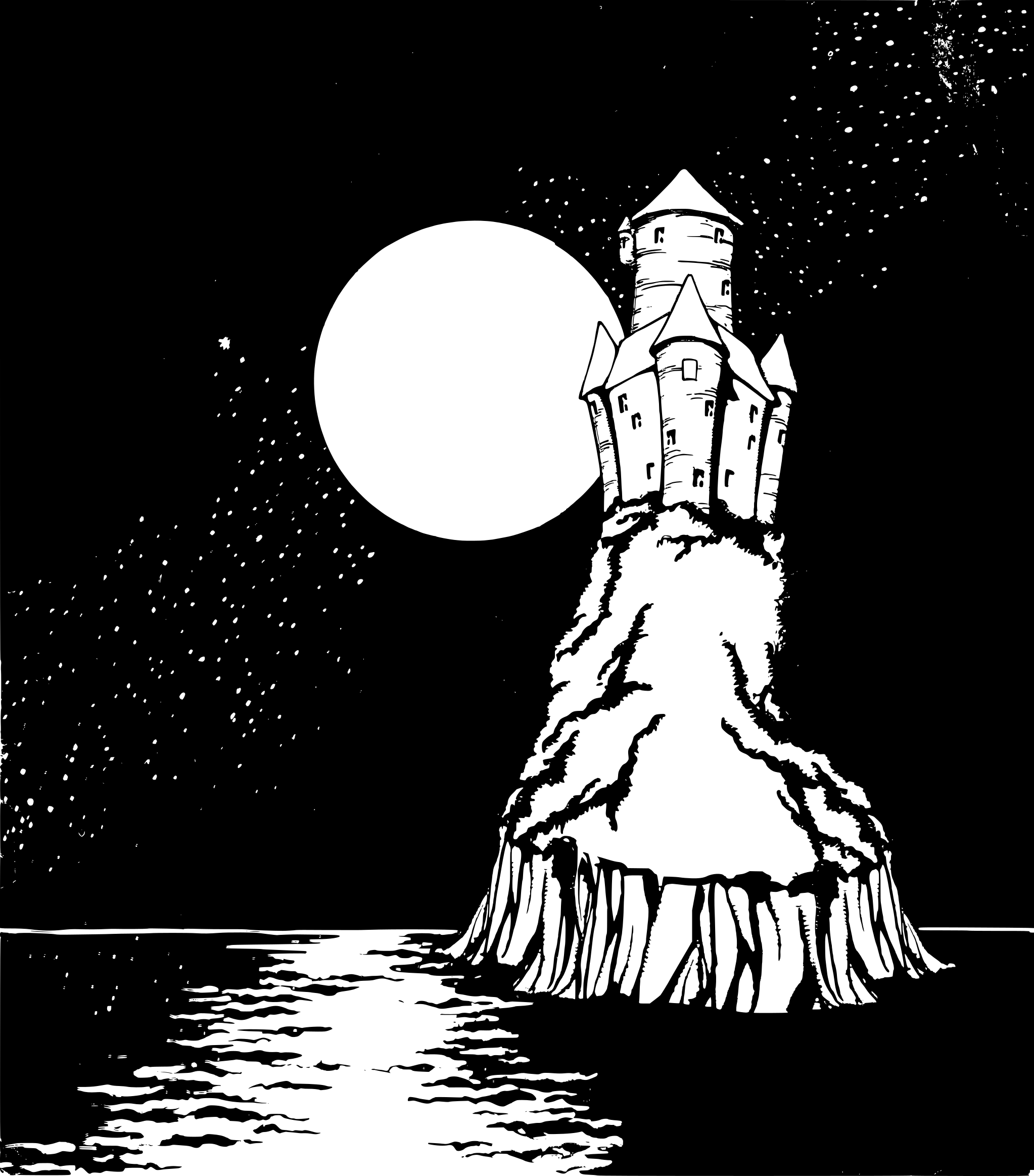 It rises there still, on that pillar carved by nature just offshore. The lens of fresh water that once maintained its garrison still exists, and the walls, though old, show no signs of collapse.
Mirria herself has not been seen since the day after the fatal banquet; she was seen by villagers on the shoreline the next day on the battlements, still dressed in her motley harlequinade from the masque.
Most believe she died there, a prisoner of her family’s machinations to the end. The villages that had sprung up nearby gradually faded away as well, though food is still left on the island’s docks as per the old tenant’s agreements by the few who remain, mostly fishermen.
But there are some who point to the food that disappears from the docks as proof that Lady Mirria lives on, in self-imposed exile now rather than the former decadent cloister. No one has ever seen her in the twenty years since, nor has anyone noticed any lights at night, but it may just be possible.
If she yet lives, the island and its tower do provide one gift. With no nearby nearby lights, at night the sky above is awash with stars, and those points of light are enough to comfort even the loneliest of souls.
September 1, 2020
From “The Spider-Centaur Amidst Gossamer Young” by Anneliese Schnur
Posted by alexp01 under Excerpt | Tags: fiction, story |Leave a Comment
The crime scene was covered in gossamer-thin webs, perfectly preserving it. The mother huider took up most of the room, but she had been protected with a layer of extremely fine, sticky threads, almost like a mourning veil. Beneath it, her ichor stained the lush carpet and had already begun to dry and attract fairies.
Alan brushed them away. “Shoo!” he said. “Get out of here. This isn’t forensics, dammit, it’s janitorial services.”
“She’s beautiful,” Jen said, looking at the crumpled figure.
“That’s one word to use for it,” Alan said. “Creepy is another. Spiders weird me out, and huiders have entirely too much spider and entirely too little human for my taste.”
“Did she do all this?” Jen continued, pointing at the webs.
“After she was dead? That’s a hell of a trick.” Alan shook his head. “Nah. Her kids did it.”
“Kids?” Jen noticed, after a moment’s observation, that Alan was very deliberately keeping his head down and his baseball cap’s brim was blocking out most of his upward vision.
She looked at the ceiling and gave a little yelp as a dozen or more cherubic faces looked back, their newborn-like torsos at odds with the multitude of eyes on each face, shining from the dim ceiling, and the many legs and gently bobbing abdomens behind them.
“Yeah,” Alan said. “I won’t say much about spiders, scoripions, huiders, and the like, but I will say this: they are good mommas. Them babies is gonna have it rough on their own.”
August 31, 2020
From “The Twilight Sentinel” by Ginnetti Whitsell
Posted by alexp01 under Excerpt | Tags: fiction, story |Leave a Comment
“This is the Twilight Sentinel,” they said, pointing to the colossal statue of a man in quaint, classical armor. “It will come to life and defend us when our need is greatest. You can see the results of its work in the enemies that have shattered themselves against us.”
“How long has it been since it was tested?”
“One thousand years.”
“How do we know it will work?”
“We don’t. But the stories do most of the heavy lifting.”
 Excerpts From Nonexistent Books