01010100 01001000 01000101 00100000 01000111 01001000 01001111 01010011 01010100 00100000 01001001 01001110 00100000 01010100 01001000 01000101 00100000 01001101 01000001 01000011 01001000 01001001 01001110 01000101 00100000 01001001 01010011 00100000 01000001 00100000 01001101 01001001 01001110 01000100 00100000 01000101 01001110 01000011 01001000 01000001 01001001 01001110 01000101 01000100 00100000 01000110 01001111 01010010 00100000 01010111 01000001 01001110 01010100 00100000 01001111 01000110 00100000 01010011 01010000 01000001 01000011 01000101 00100000 01001001 01001110 00100000 01010111 01001000 01001001 01000011 01001000 00100000 01010100 01001111 00100000 01000100 01010010 01000101 01000001 01001101
January 19, 2015
From “01000001 00100000 01001001 01010011 00100000 01000001” by 00111111
Posted by alexp01 under Excerpt | Tags: binary, fiction, mystery, story |Leave a Comment
January 18, 2015
From “The Dive” by Ed Veith
Posted by alexp01 under Excerpt | Tags: fiction, story |Leave a Comment
“It’s not much of a living,” said Nadine over the glass counter of her mall kiosk. “But I’ve been saving up.”
“But the jewelry looks very fine,” Duane said, admiring the finely-wrought, if gaudy, pieces on display. “Surely you must do very well.”
“The cost of materials and the rent of this place takes a stiff bite out of everything I do,” said Nadine sadly. “But I’ve almost got enough saved up for the next phase.”
Duane nodded. “May I ask what that is?”
“Moving to Seattle with my mother,” Nadine said, her eyes glittering. “We’ve got a lead on a place there that costs half as much, and suppliers that are cheaper too. It’ll be a better life for both of us.”
“Well, best of luck to the both of you, then,” said Duane. “I’m sure you’ll do well.”
“Thank you.”
A dark tunnel enveloped Duane’s vision and he was wrenched out of his deep dive into the here and the now. “Seattle,” he said to Carla after catching his breath. “Look for your mother in Seattle.”
January 17, 2015
From “Myassa bint Leya bint Raaheel al-Thurayya Tells All” by Bernard S. Roberts
Posted by alexp01 under Excerpt | Tags: fiction, names, religion, science fiction, story |Leave a Comment
“There’s not much to tell. ‘Jai’ means ‘victory’ in Hindi and ‘Chandrakant’ means ‘moonstone.’ My family had been jewelers for a long time, and we’ve always been famous for grinding moonstones.”
“I’m sure you’ve heard me give my full name as Myassa bint Leya bint Raaheel al-Thurayya,” said Myassa, “usually when I want to piss somebody off.”
“Well, ‘bint’ means ‘daughter of.’ In most names you’d say ‘son of X, daughter of Y,’ or ‘son of X, grandson of Y’ but I decided to mix it up. So I have my mother Leya and grandmother Raaheel, which you will almost never see in a real name.”
“And ‘al-Thurayya’ means ‘of the Pleiades,’ which is fitting given where I came from.”
“What about Myasssa?”
“Well, it’s not the given name they slapped on me when I was born, if that’s what you’re asking. That name meant ‘chaste,’ which doesn’t really fit in with Dad’s obsession for grandchildren, but whatever.”
“So why’d you choose it?”
“Well, believe it or not, my family was actually descended from the rules of a tribe. Not close enough to actually get many perks, but we were well-off enough that we qualified for the honorific ‘sheikh’ for the lads and ‘shaykhah’ for the ladies.”
“You’ve lost me,”
“Well, as a shaykhah, it only makes sense for me to be known as Shaykhah Myassa,” Myassa laughed.
Jai, perplexed, turned the syllables over in his mouth. “Shake-a my-ass-a,” he said at length, comprehension breaking like dawn across his face before he collapsed in helpless laughter.
January 16, 2015
From “Crunch Time Inside the Pun Magazine Humordrome” by Dom Mohurré
Posted by alexp01 under Excerpt | Tags: fiction, humor, puns, story |Leave a Comment
“I’m trying to decide between these two. What do you think?”
The editor took the copy and read over it. The first read:
Did you ever hear about the guy who refused to follow the rules of grammar? He’s a rebel without a clause.
And the second:
Timmy says he’s too old to believe in Santa. He’s a rebel without a Klaus.
January 15, 2015
From “1921: Epilogue” by Tania-Stacy Stancliffe
Posted by alexp01 under Excerpt | Tags: All-Russian Extraordinary Commission, Cheke, Chekist, demon, fiction, mythology, old got Slavic mythology, Russia, Russian Revolution, Soviet Union, story, troika |Leave a Comment
“In the matter of Feodor Pushkov, also known as Feodor Serpov or Feodor Oruzheynik, it is the decision of the All-Russian Extraordinary Commission for Combating Counter-Revolution, Profiteering and Corruption that he be stripped of his title and rank and executed.” Lebedev, the head of the troika, peered at Feodor over his glasses and under the sky-blue cap of a Chekist.
Feodor, still wearing his uniform but with the insignia newly torn off, sat in a rude wooden chair in front of the three Cheka members, the most senior of whom was in charge of the entire region. His shoulders were sagged, and he nervously played with worry beads in his hands. “There was a time,” he said wearily, “when you all reported to me as your commissar. Does that mean nothing to you? Does all that I have done for the party and the state mean nothing to you?”
“It has been established to the satisfaction of this extraordinary committee that your actions were undertaken in the context of your role as informer and spy for the Black Army and foreign interventionists,” replied Lebedev, sounding bored. “You yourself said that traitors must be shot without mercy and that terror is the cost of a new utopian state. At least conduct yourself with dignity and hold true to those words.”
“What of Tatyana?” Feodor said. “What of Pyotr?”
Lebedev rolled his eyes. “It has been established to the satisfaction of this extraordinary committee that the woman Tatyana Alexandrovna is under no suspicion. As for the aristocrat Pyotr you mention, the extraordinary committee has sentenced him to death in absentia. But you know as well as I do that there has been no sign of him since the…incident…and that he is presumed dead. We will not waste the bullet to execute a dead man.”
“Very well,” whispered Feodor. “If that is to be my punishment for my sins, so be it.”
He was led away to the execution cells, and the Chekists of the Troika chatted amongst themselves for a time. Lebedev had just been promoted to Feodor’s old post as commissar, and the others were eager to gain his favor and avoid being added to the ever-lengthening execution rolls. Once they left, he turned to the window and his features blurred, revealing the scaly visage and deep-set red slit eyes of Peklenc, the Old God of judgment and the underground.
“Even with so many of us dead, we can make this work,” he said in a soft and serrated voice. “We can use this new order to ensue that those who remain have their fill of blood.”
His gaze wavered, though, as he spied a figure in a window across the courtyard. There, peering silently at him from behind the glass, was Pyotr.
January 14, 2015
From “1918: The Anarchy” by Tania-Stacy Stancliffe
Posted by alexp01 under Excerpt | Tags: demon, fiction, mythology, old got Slavic mythology, Russia, Russian Revolution, Soviet Union, story |Leave a Comment
“It was wiped clean in the space of a few short decades, that which we had spent generations, centuries, millennia, in building. Perun and Veles were cast down, and without the strength of the peoples’ beliefs to sustain them they were unable to respond. Those of us who survived were forced to mime the hateful rituals of the Enemy.” Boris–or was it Triglav?–advanced on Pyotr, his three goat heads leering over the tattered remains of his uniform.
“I don’t understand!” Pyotr cried, brandishing his Obrez pistol. “Why try to make things worse?”
“This is an opportunity. In chaos are always opportunities. When people lose faith, we of the old gods suddenly find our playing field leveled. When people who believe in nothing are in power, we grow stronger.”
“And Feodor…?”
“We need intermediaries as we always have,” said Triglav offhandedly. “Now, since you have proven yourself adaptable, will you join him? The Germans are fleeing, the Bolsheviks are weak and tottering in Petrograd, and we are well-placed to sow chaos and misery and death among those that remain. If you assist us, you will be spared.”
“What kind of god would want to sow misery and death among its own people?”
“Beyond punishment of the people of this land? Simple. We are spirits of this place, and our thirst can only be slaked with blood. For too long have we had to content ourselves with a trickle, and a pious trickle at that. We have worked for many years to undermine the new faith and its defenders, and our efforts are finally about to bear fruit. We haven’t been closer to our return, our rebirth, in a hundred years.”
January 13, 2015
From “1917: The Rise” by Tania-Stacy Stancliffe
Posted by alexp01 under Excerpt | Tags: fiction, Provisional Government, Russia, Socialist Revolutionaries, story, World War I |Leave a Comment
“It’s…good to see you again,” said the Baron. “You’ve been fighting, I hear. Avoiding the family name, the family lands.”
“It was the only way to clear my mind of what happened,” Pyotr replied.
The Baron nodded. “Feodor and Arkady, yes. A tragedy at the hands of those animals, the Socialist Revolutionaries. Arkady died a soldier’s death, and I saw to it he had a soldier’s burial, in the family plot.”
“That was kind of you,” Pyotr said. “A pity you couldn’t be more kind to him in life.”
“I suppose I deserve that,” said the Baron. “Though I hoped that, in the midst of all this madness, that you might understand.”
“What of the family lands? What of Feodor?” Pyotr asked.
“The lands are still ours. I’ve pledged to support the Provisional Government and promised the tenants what they need to get by. The Czar was weak, a weak fool, to let them come to power, but they’re better than the alternative. A bulwark against the Socialist Revolutionaries coming to power.”
“And Feodor?”
“Last I heard he took to the hills with about half of your old State Militia detachment. Joined the SRs, I imagine, though they say that his men took out a German patrol. So they haven’t forgotten their patriotism at least, and are still serving their betters even if they themselves do not yet understand it.”
January 12, 2015
From “1916: The Fall” by Tania-Stacy Stancliffe
Posted by alexp01 under Excerpt | Tags: Czar, Czarist, fiction, Russia, State Militia, story, World War I |Leave a Comment
“You don’t get it, do you?” snarled Feodor. “I did what I had to do to protect the Baron. He is a noble, he is an important member of His Majesty’s imperial government, and his death would have thrown this oblast into chaos! Those are the kind of decisions a leader has to make.”
“Not with lives,” sobbed Viktor. “Not with human lives, not with people that we love. We fought together, Zinoviy. I would have died for you, and this is how you’ve repaid me? Look at what you’ve done!” He was on his knees, ignoring the still-burning fires from the destroyed automobile, the dead body of his younger brother clutched desperately to his chest.
Pyotr, stunned, could only watch. Rifles cracked all around them as Feodor’s detachment cut the assassins to ribbons. The Baron’s car and the remainder of the motorcade had sped off down the road, not knowing or not caring that his son was still at the site of the ambush with his companions in the State Militia.
Feodor approached Viktor. “I am sorry that he had to die,” he continued in a slightly milder tone. “Truly I am. But the only way to finally squash the Socialist Revolutionaries was to spring their trap, and placing him and the others in the Baron’s car in the motorcade was the only way to do it without endangering the Baron’s life.”
With the speed of a madly uncoiling spring, Feodor leapt to his feet, dropping his brother’s cooling body to the ground. He drew his bayonet–the same cruciform bayonet in the British style that he had made in his father’s shop–and held it to Feodor’s throat. “That’s not true,” he growled. “You could have sat in that car yourself.”
A hue and cry went up, and many of the remaining State Militia trained their weapons. Some aimed at Feodor, others at Viktor, while some like Pyotr simply held their weapons in stunned readiness.
“You wanted to lick the Baron’s boots,” Feodor continued, his words dripping with poison and pain. “Hoping to get him as a patron to better yourself. You used us, all of us, for your own selfishness. Especially him. Especially Arkady.”
“Think about what you’re doing,” said Viktor darkly. “By taking up arms against the State Militia you’re casting your lot in with those that just killed Arkady.”
“No,” spat Feodor. “You killed him. The SRs were simply to trying to wipe his filth off this earth. And you know what? Maybe they’re right.”
With a smooth motion, he drew the blade across Viktor’s throat. Gurgling and spurting crimson, the latter sank to his knees, whimpering as he bled out. Without so much as a glance at his corpse, or at Pyotr, Feodor turned to the militiamen.
“You all saw what happened here, comrades,” he said. “Who will join with me in deserting this rat’s nest and stomping them out, and who will put themselves in the service of those who butcher children for their own advancement?”
January 11, 2015
From “Happy Unicorn Appreciation Day 2015!” by Lynn Ruelle Badeau
Posted by alexp01 under Excerpt | Tags: Chinese Unicorn, Dumbarton Oaks Unicorn Lady, fiction, humor, story, unicorns, World Unicorn Appreciation Day |[3] Comments
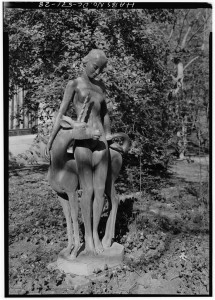
The Dumbarton Oaks Unicorn Lady, erected in Washington D.C. for the International Day of the Unicorn, November 1, 1911. Courtesy Library of Congress.
Today’s post is in support of Unicorn Appreciation Day at Fish of Gold. Be sure to visit to express your solidarity!
Today is World Unicorn Appreciation Day, and in recognition of that happy fact, here is a list of other unicorn-related days throughout the yearly calendar:
January 11: World Unicorn Appreciation Day – The 5th Annual Congress of the Mythological Animal Preservation society declared January 11 to be World Unicorn Appreciation Day in 1905. In their statement, conference chair Dr. Stanley Einhorne said that “the time has now come to honor these majestic creatures and to stop the indiscriminate slaughter and disbelief which have bedeviled them since the advent of modern magic-piercing ammunition.” Adoption was slow, and nations which hadn’t attended the Congress have rejected the date, which was chosen by the delegation based on the American date reading of 1/11.
April 4: 幸運的柒柒柒龍吉祥麒麟一天肆兩黃金 – Proclaimed by the Kangxi Emperor in 1664, 幸運的柒柒柒龍吉祥麒麟一天肆兩黃金 (lit. “Lucky 777 Dragon Auspicious Kirin Day With 4 Taels of Gold”) was the very first day associated with unicorns to be proclaimed anywhere in the world (aside from perhaps the Minoan “Horn Festival” which many have interpreted as celebrating minotaurs instead). Created specifically to celebrate the one-horned Chinese Unicorn or kirin, (獨角麒麟 or du jiao kirin, lit. “unicorn kirin”) which had long been a symbol of good luck, prosperity, and auspiciously arranged furniture. Traditional celebrations include offerings of gold to kirins, the wearing of elaborate kirin onesies, and of course the traditional 紫麒麟purple kirin lanterns. The holiday was suppressed by Mao Zedong between 1949 and 1976 and the slaughter of kirin for food was encouraged, but the population has rebounded and the government currently enforces the death penalty for kirin poaching in an effort to encourage unicorn tourism.
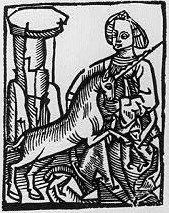
A woodblock print of a Chinese Unicorn (Kirin) from De Tomaso’s Cor Sinarum (1668). Courtesy Library of Congress.
June 1: Einhorntag – Proclaimed by Kaiser Frederick III in 1888, Einhorntag was the first official protection/preservation accorded to the Eurasian unicorn. Perversely, from 1888-1914, Einhorntag was the date of Kaiser Wilhelm II’s annual Einhornjagd, when a team of virgins would beat the bushes to flush out unicorns for Wilhelm to shoot one-handed to prove his manliness. After the German Revolution, the Weimar Republic restored Einhorntag to its conservation roots. Strangely, the Third Reich continued the practice and did not harvest its own unicorns for the war effort, relying instead on captured French and Polish unicorns; indeed, considerable propaganda material of the Führer riding or being sought out by unicorns survives to this day.
July 10: Australunicorn Preservation Day – The rare australunicorn (“loarinnacon” in the native Parlevar tongue) was granted official protection on July 10, 1937–two months after the last known specimen in the Hobart Zoo was mounted by a virgin and disappeared into the bush. Hunted due to the perception that they competed with introduced Eurasian unicorns on Tasmania’s famous, vast, free-range unicorn farms, no australunicorns have been captured since then. Sightings persist, though, and with the rediscovery of the Tasmanian bunyip (thought extinct since 1908), authorities use Australunicorn Preservation Day as the occasion for an annual search with volunteer virgins.
November 1: International Day of the Unicorn – Dissidents from the CMAP conference held their own meeting in 1906 to declare November 1 the International Day of the Unicorn. This alternate date gained currency worldwide for several years, and to this day many commemorative plaques and statues list dates of 11/1 (especially confusing when one considers the differing American and European methods of writing out dates). A grand celebration held on 11/1/1911 attracted almost a million people, but the world wars eventually caused this day to dwindle in popularity. It’s still officially observed in many Spanish-speaking countries as “Día Internacional del Unicornio,” though, as the January 11 date conflicts with Día de Eugenio María de Hostos and Día Internacional de Gracias.

A print of the newly-discovered Australunicorn (Loarinnacon) in Cooke’s Codex Australis (1702). Courtesy Library of Congress.
December 29: Yedinorog-Den (единорог день) – Russian delegates were absent from the CMAP congress that declared World Unicorn Appreciation Day due to the Revolution of 1905, but adopted it informally later on. They celebrated it on December 29 of the Julian calendar, and it remained on that date even when the new Soviet government moved to the Gregorian calendar in 1918. It was celebrated as a propaganda holiday as a way to cover up the USSR’s massive state-sponsored unicorn farms, which ruthlessly processed unicorns held in inumane conditions to obtain elixirs for the nomenklatura and horndust for use in tank armor and anti-magic artillery shells. The RDS-U1\11C0R1\1 Anti-Magic Ballistic Missile was the ultimate product of this, and its first test was on December 29, 1967.
Check out these other celebratory posts:
L. R. Badeau on Being a Full-Time Unicorn
Presenting Horace Swindley’s Unicorn Droppings
The 301st Fighting Unicorn Division
The 302nd Fighting Unicorn Division
The 303rd Fighting Unicorn Division
January 10, 2015
From “The Planter’s Share” by Georgia Rainford
Posted by alexp01 under Excerpt | Tags: acting, Cervantes, fiction, pirates, plantation, Shakespeare, slavery, story |1 Comment
“I’m descended from Alexander Cooke, who worked his way up from an indentured stagehand to an actor in the King’s Men, alongside old Bill Shakespeare.”
“Who?”
“Our Cervantes,” said Cooke. “I imagine the plays and poems haven’t been translated yet, but they’re terrific at cheering you up if you’re in a bad mood or darkening your mood if you’re too cheerful, which is a very neat trick common to great scriblarians.”
“If he’s anything like Cervantes, your ancestor was a lucky man…even if he had to laugh through his tears,” said María Nereida.
“He was lucky,” Cooke said. “His son–also Alexander–was able to turn his inheritance into a plantation in the New World. He was also able to use it to get away from his wife in London.”
“I sense that your mother was not appreciative of that,” María Nereida said.
“I think she was less appreciative of that than the fact that she wasn’t my mother,” laughed Cooke. “My father took his son with him to the New World and then met my mother when he bought her in Jamaica. It was quite the scandal.”
“Why is that?”
“You have to understand that we Englishmen have a different and much less enlightened view of such things than you Spaniards,” Cooke said. “As the child of my father’s property, I was property myself. He was a good man, more or less. He freed Mother and I even as he kept her kinsmen in bondage, and he brought my half-brother and I up as equals and educated us in the running of his plantation.”
“But things surely did not stay happy, or else you would be there and not here.”
“That’s one way of putting it,” Cooke laughed ruefully. “When Father died, Anthony wasn’t content with a half-share of the plantation. He took the whole thing, and added to his profit by selling me.”
 Excerpts From Nonexistent Books