January 2015
Monthly Archive
January 11, 2015
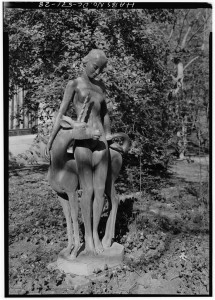
The Dumbarton Oaks Unicorn Lady, erected in Washington D.C. for the International Day of the Unicorn, November 1, 1911. Courtesy Library of Congress.
Today’s post is in support of Unicorn Appreciation Day at Fish of Gold. Be sure to visit to express your solidarity!
Today is World Unicorn Appreciation Day, and in recognition of that happy fact, here is a list of other unicorn-related days throughout the yearly calendar:
January 11: World Unicorn Appreciation Day – The 5th Annual Congress of the Mythological Animal Preservation society declared January 11 to be World Unicorn Appreciation Day in 1905. In their statement, conference chair Dr. Stanley Einhorne said that “the time has now come to honor these majestic creatures and to stop the indiscriminate slaughter and disbelief which have bedeviled them since the advent of modern magic-piercing ammunition.” Adoption was slow, and nations which hadn’t attended the Congress have rejected the date, which was chosen by the delegation based on the American date reading of 1/11.
April 4: 幸運的柒柒柒龍吉祥麒麟一天肆兩黃金 – Proclaimed by the Kangxi Emperor in 1664, 幸運的柒柒柒龍吉祥麒麟一天肆兩黃金 (lit. “Lucky 777 Dragon Auspicious Kirin Day With 4 Taels of Gold”) was the very first day associated with unicorns to be proclaimed anywhere in the world (aside from perhaps the Minoan “Horn Festival” which many have interpreted as celebrating minotaurs instead). Created specifically to celebrate the one-horned Chinese Unicorn or kirin, (獨角麒麟 or du jiao kirin, lit. “unicorn kirin”) which had long been a symbol of good luck, prosperity, and auspiciously arranged furniture. Traditional celebrations include offerings of gold to kirins, the wearing of elaborate kirin onesies, and of course the traditional 紫麒麟purple kirin lanterns. The holiday was suppressed by Mao Zedong between 1949 and 1976 and the slaughter of kirin for food was encouraged, but the population has rebounded and the government currently enforces the death penalty for kirin poaching in an effort to encourage unicorn tourism.
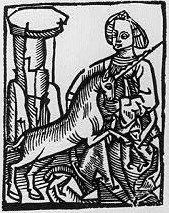
A woodblock print of a Chinese Unicorn (Kirin) from De Tomaso’s Cor Sinarum (1668). Courtesy Library of Congress.
June 1: Einhorntag – Proclaimed by Kaiser Frederick III in 1888, Einhorntag was the first official protection/preservation accorded to the Eurasian unicorn. Perversely, from 1888-1914, Einhorntag was the date of Kaiser Wilhelm II’s annual Einhornjagd, when a team of virgins would beat the bushes to flush out unicorns for Wilhelm to shoot one-handed to prove his manliness. After the German Revolution, the Weimar Republic restored Einhorntag to its conservation roots. Strangely, the Third Reich continued the practice and did not harvest its own unicorns for the war effort, relying instead on captured French and Polish unicorns; indeed, considerable propaganda material of the Führer riding or being sought out by unicorns survives to this day.
July 10: Australunicorn Preservation Day – The rare australunicorn (“loarinnacon” in the native Parlevar tongue) was granted official protection on July 10, 1937–two months after the last known specimen in the Hobart Zoo was mounted by a virgin and disappeared into the bush. Hunted due to the perception that they competed with introduced Eurasian unicorns on Tasmania’s famous, vast, free-range unicorn farms, no australunicorns have been captured since then. Sightings persist, though, and with the rediscovery of the Tasmanian bunyip (thought extinct since 1908), authorities use Australunicorn Preservation Day as the occasion for an annual search with volunteer virgins.
November 1: International Day of the Unicorn – Dissidents from the CMAP conference held their own meeting in 1906 to declare November 1 the International Day of the Unicorn. This alternate date gained currency worldwide for several years, and to this day many commemorative plaques and statues list dates of 11/1 (especially confusing when one considers the differing American and European methods of writing out dates). A grand celebration held on 11/1/1911 attracted almost a million people, but the world wars eventually caused this day to dwindle in popularity. It’s still officially observed in many Spanish-speaking countries as “Día Internacional del Unicornio,” though, as the January 11 date conflicts with Día de Eugenio María de Hostos and Día Internacional de Gracias.

A print of the newly-discovered Australunicorn (Loarinnacon) in Cooke’s Codex Australis (1702). Courtesy Library of Congress.
December 29: Yedinorog-Den (единорог день) – Russian delegates were absent from the CMAP congress that declared World Unicorn Appreciation Day due to the Revolution of 1905, but adopted it informally later on. They celebrated it on December 29 of the Julian calendar, and it remained on that date even when the new Soviet government moved to the Gregorian calendar in 1918. It was celebrated as a propaganda holiday as a way to cover up the USSR’s massive state-sponsored unicorn farms, which ruthlessly processed unicorns held in inumane conditions to obtain elixirs for the nomenklatura and horndust for use in tank armor and anti-magic artillery shells. The RDS-U1\11C0R1\1 Anti-Magic Ballistic Missile was the ultimate product of this, and its first test was on December 29, 1967.
Check out these other celebratory posts:
L. R. Badeau on Being a Full-Time Unicorn
Presenting Horace Swindley’s Unicorn Droppings
The 301st Fighting Unicorn Division
The 302nd Fighting Unicorn Division
The 303rd Fighting Unicorn Division
- Like what you see? Purchase a print or ebook version!
January 10, 2015
“I’m descended from Alexander Cooke, who worked his way up from an indentured stagehand to an actor in the King’s Men, alongside old Bill Shakespeare.”
“Who?”
“Our Cervantes,” said Cooke. “I imagine the plays and poems haven’t been translated yet, but they’re terrific at cheering you up if you’re in a bad mood or darkening your mood if you’re too cheerful, which is a very neat trick common to great scriblarians.”
“If he’s anything like Cervantes, your ancestor was a lucky man…even if he had to laugh through his tears,” said María Nereida.
“He was lucky,” Cooke said. “His son–also Alexander–was able to turn his inheritance into a plantation in the New World. He was also able to use it to get away from his wife in London.”
“I sense that your mother was not appreciative of that,” María Nereida said.
“I think she was less appreciative of that than the fact that she wasn’t my mother,” laughed Cooke. “My father took his son with him to the New World and then met my mother when he bought her in Jamaica. It was quite the scandal.”
“Why is that?”
“You have to understand that we Englishmen have a different and much less enlightened view of such things than you Spaniards,” Cooke said. “As the child of my father’s property, I was property myself. He was a good man, more or less. He freed Mother and I even as he kept her kinsmen in bondage, and he brought my half-brother and I up as equals and educated us in the running of his plantation.”
“But things surely did not stay happy, or else you would be there and not here.”
“That’s one way of putting it,” Cooke laughed ruefully. “When Father died, Anthony wasn’t content with a half-share of the plantation. He took the whole thing, and added to his profit by selling me.”
- Like what you see? Purchase a print or ebook version!
January 9, 2015
When the Great Work was complete, and Q’idaa was as his own lush and eternal garden, I’ozru summoned his children to him one last time. Then said he to the gathered R’de “four shall be your number, and your number shall be four.” He laid forth the precepts binding the Four Castes.
First were the R’odue, the Keepers of the Bonds. They were given power over workplaces, governments, and other organizational tools. Their edict was organization and cohesion, but not at the expense of love.
Second were the R’idye, the Reshapers of the Bonds. Their sphere was that which could not be organized and resisted cohesion. Theirs were the artists, the dreamers, the thinkers, the architects, and their edict was to form new and exciting things, but not at the expense of the old.
Third were the R’adue, the Movers of the Bonded. All that moved and worked was theirs to keep and maintain, and they were to be the craftsmen, workers, and soldiers of the R’de. To them was given the edict to reshape their world, but not at the expense of harmony.
Last were the R’ydae, the Viewers of the Bonds. At their feet was laid the great task of planning and orchestrating all the others, of visions and plans and overall harmony. Theirs was the gravest edict of them all: to ensure the survival of the R’de and by extension their world, but not at the expense of other groups or other worlds.
In doing so, the R’de were split into their castes and the rulers of the great Houses were selected and their membership decided upon. The last words were a warning: above all, no caste was to be held inviolate and none was to be raised above the others. It was deliberate that the R’ydae, from whom the heads of the Houses were chosen, were numbered last and lowliest though theirs would be the most visible power. They were to be servants as base as those R’adue who toiled in manual labor.
The pronouncements made, the new heads of the Houses were each given a final, private audience. I’ozru gave unto them his last wisdom and departed from the R’de never to return. His words, known only to the heads of the Houses, guide the R’de through the ages even unto now through prosperity and adversity, want and plenty, war and peace, suzerainty and enslavement.
- Like what you see? Purchase a print or ebook version!
January 8, 2015
All jetliners accumulate oily residue near their exhausts. It’s rarely a serious concern, being as it is mostly carbon that can’t be burned any further, but the vagaries of air travel in the jet age are such that planes can’t be washed often. It takes an eight-hour layover at an airport with the right facilities, meaning that hardworking airliners are lucky to get a bath once every two months.
Aircrew and ground personnel are sometimes known to scrawl graffiti in the residue, much like a merry prankster wiping the mud off a dirty car to write “wash me.” It’s frowned upon, obviously, and much more difficult in the post-9/11 era, but earlier aircraft often went aloft with a variety of crude or humorous temporary tattoos inscribed where (hopefully) no passengers could see them.
In 1979, a Lockheed L-1011 TriStar belonging to Midwestern Airlines (MSN 1251, registration N983MW) had one such message discovered by its ground crew at 6:32 AM during routine preflight checks. The message, “LOOK OUT BELOW,” earned eyerolls from those who saw it. The pilot for the flight, Capt. Laudner Bellow, found it even less amusing: he’d been known as “Lookout” Bellow in his years flying Linebacker raids over North Vietnam. He angrily ordered the crew to scrub off the message before departing for Baltimore.
On its final approach to Baltimore/Washington International, a cargo door on N983MW blew open, scattering items from the cargo compartment over a wide area. The plane landed safely, and the incident was traced to a stress fracture in the locking latches. Despite some suspicion of Capt. Bellow for sabotage, the incident was quickly forgotten and N983MW was repaired and returned to service.
Six months later, another message appeared at around noon just before a trip to Chicago: “MIND THE BUMP.” The ground crew chief at Baltimore, Ernest “Bumpy” Washington, Jr., took the apparent joke in good humor but noted it in the log. That afternoon, N983MW encountered severe supercell thunderstorms midway through its flight, causing violent turbulence that injured three passengers whose seatbelts had not been properly secured. There was no question of “Bumpy” Washington having cause the turbulence, but rumors began to swirl among Midwestern Airlines staff about N983MW.
The situation was not improved when, a month later, “OUT OF GAS” appeared written in the residue that had accumulated since N983MW’s wash after its Chicago accident. The crew, superstitious, insisted on a full preflight check, which uncovered nothing awry. The delay forced a temporary route reassignment, and as a relatively new jet N983MW was reassigned to fly the LAX-Honolulu route for a month. On its first flight, Hurricane Fico forced the aircraft to circle for hours before landing, and the captain estimated on touching down at Honolulu International (on two engines, to save fuel) with less than ten minutes of powered flight time remaining.
It becomes difficult to separate fact from fiction at this point, as it had become well-established around the Midwestern Airlines watercooler that N983MW was cursed and its misfortunes predicted by preflight graffiti. No doubt many pranksters took it upon themselves to add to the legend with their own scrawls, and jittery crew chiefs marked down patterns that may have, in retrospect, been mere coincidence. Midwestern, for its part, simply tried to ignore the issue and scheduled M983MW for more cleanings than usual.
What is known is that on June 2, 1981, the message “GOODBYE” appeared near N983MW’s tail. The captain and flight crew refused to board the aircraft, prompting Midwestern to fire them all for insubordination. Three other crews also refused and were written up for insubordination before the staff of N946MW out of Detroit agreed to swap. The flight, a short hop across the Chesapeake to Richmond, was widely known as a milk run.
N983MW disappeared from radar twenty minutes into its flight, and the first debris washed ashore several hours later. The accident, along with another on September 22 of that year, caused a fatal loss of confidence in the TriStar as an airframe, leading to slashed production orders and the eventual withdrawal of Lockheed from the commercial aviation business.
No cause for the crash was ever determined.
Inspired by this news story.
- Like what you see? Purchase a print or ebook version!
January 7, 2015
I have to admit I’d never heard of Charlie Hebdo until it became the epicenter for the worst terrorist attack on French soil in two decades. It would be like the offices of Cracked or Mad had been raided here in the States, though Charlie Hebdo was certainly far more openly political and leftist than those safely zany lampoons of pop culture. But even if the comparison is imprecise, to see such a publication attacked by violent zealots, leaving its best and brightest minds bleeding out on fresh newsprint, is a kind of directly censorious assault that leaves the mind reeling.
It was censorship of the most direct kind, practiced since Mark Antony had Cicero’s severed head and hands displayed in the Forum, and like all such acts it was designed to breed censorship of the most indirect kind. Self-censorship is the ultimate goal, to get the satirist to give up attacking a sacred cow before they even begin.
Now here’s the thing. People have already begun responding with hashtags and solidarity to the barbarism, which is always welcome and a good sign. But ultimately it won’t be the person on the street or even the government that decides how much self-censorship will come from this assault. It’ll be the lawyers.
It’s all well and good to loudly proclaim the virtues of free speech in the face of terrorism designed to intimidate people into self-censorship. But what of the next generation of satirists and cartoonists, the magazines and rags that are struggling or yet to be born? What happens to them then they try to incorporate, to get insurance?
I can see it now: an insurance underwriter denying a satirical publication coverage after they refuse to self-censor. A staff lawyer preemptively putting the kibosh on a potentially inflammatory issue for liability reasons. Remember just a few short weeks ago, when The Interview was pulled from theaters? “Liability” was the fig leaf there, too.
And it’s not just a fig leaf for a satirist or cartoonist. Imagine if you, uninsured and unprotected, publish something that gets someone on your staff–or, hell, even an innocent person elsewhere–hurt or killed. In today’s climate, that’s a huge liability and you could find yourself on the hook for expenses that no modest income could cover.
That’s my big worry out of all of this. Not just that there will be self-censorship, but that it will be perversely driven not from ideology or fear but simple liability and actuarial charts. I hope that’s not the case. I hope that, whether through the use of new media or decentralized distribution, such prosaic issues aren’t enough to kneecap people’s speech and especially their humor. After all, such wasn’t the terrorists’ intent–they aren’t that smart. A suppressed bullet and car bomb are all the subtlety they know.
I hope that we won’t allow mundanity and prosaic interests to do to us what naked fear cannot, but I’m afraid I’m just too cynical to believe it will be so.
- Like what you see? Purchase a print or ebook version!
January 6, 2015
Posted by alexp01 under
Excerpt | Tags:
fiction,
story |
Leave a Comment
“I’ve seen the ledger, Trevor.” Callie thumped the book down on the kitchen table. “It’s right there in black and white. Payments from your account once a month since The Deboutique opened.”
Trevor was unfazed. “Of course,” he said. “I made an arrangement with your landlord when you took over the lease. I paid 90% of the cost each month off the books, and in return the full cost wasn’t on the bills you got.”
“But why, Trevor, why?” cried Callie. “If I’d had to pay the full rent, The Deboutique would have gone out of business in six weeks. I wouldn’t even have started it.”
“But don’t you see, Callie? That’s just the thing. I knew from the beginning that there wasn’t a big enough market for a boutique selling expensive clothes and knickknacks here in town. Even with all the students, there’s no way for it to make enough to meet rent, especially during the breaks.”
“Then why not just give me the money up front? Why let me try the fool’s errand of running a shop in the first place?”
Trevor’s voice was condescending, indulgent. “Because you needed a project to keep you busy and occupied, sweet pea,” he said. “You wouldn’t have put half as much effort into the place if you hadn’t thought it a success. And we’ve had so much benefit in your stature as a wife and mother and pillar of the community.”
“So that’s all it’s been,” gasped Callie, sinking into a chair. “That’s all it’s ever been. A lemonade stand to keep me busy. Girl Scout cookies.”
“You say that like it’s a bad thing, sweet pea.”
- Like what you see? Purchase a print or ebook version!
January 5, 2015
Posted by alexp01 under
Excerpt | Tags:
Camaro,
fiction,
story |
Leave a Comment
It was always there, in the furthest corner of the lot next to the abandoned and closed bar and grill. No one ever saw the Camaro come or go, but it was the newest model, windows tinted and body waxed to a radiant shine.
There was idle speculation, of course. A pimp, a drug dealer, an adulterer. When the car was issued a ticket, the fine was paid in cash in an envelope with no return address. Fines couldn’t be paid in cash, but the ticket had been in error anyway.
The day the building burned down, it vanished. No one thought anything of this, since who would want to park there after such an intense fire?
But then the Camaro appeared in the far corner of another lot, and people began to talk.
- Like what you see? Purchase a print or ebook version!
January 4, 2015
Myassa al-Thurayya chambered a fresh round in her rifle and looked through the scope for another target. None presented itself; the Vyaeh assault squad had apparently been held off for now. Myassa adjusted her aim, cursing as her hijab got in the way and temporarily blocked her sight picture until she batted it free.
“Why do you wear that thing?” Jai Chandrakant said, covering her flank with his freshly reloaded assault rifle. “If the sailor-talk wasn’t enough to show that you’re not exactly daddy’s proper little meek religious girl, there’s everything else you’ve ever said or done alongside it.”
“The last person who asked me that is still waiting for the wires to come off of their jaw,” said Myassa, without budging from her rifle. “You don’t ask. You’re told, when and if I choose to tell you.”
“Fair enough,” Jai said.
There was a pause, and at length Myassa made a resigned grunt. “I am a secular Muslim,” she said. “I wear the hijab so that people know my heritage and I have a tangible link to thousands of years of religion and culture that shaped me into who I am today.”
“A secular Muslim?” said Jai. “I’ve never heard of such a thing.”
“And yet nobody is surprised when someone calls themself a secular Jew or a secular Christian, even though they do the same thing for the same reason,” said Myassa. “You can be a secular anything. It’s a frame of mind; I didn’t fill out a bloody application form.”
“Well, sure, but why something like a hijab?” Jai said. “Why not just wear a crescent on a chain around your neck like I’ve seen people do with a Star of David or a cross?”
“The crescent is an Ottoman symbol, not an Islamic one,” said Myassa. “I have no desire to associate myself with that hoary old despotism, thank you very much.”
“Well, then what about that Arabic creed thing? The sha…shaha…hada…”
“The Shahada,” Myassa said. “And no. It’s a statement of faith, and I have none. Believe me, Jai, I’ve thought this through.”
- Like what you see? Purchase a print or ebook version!
January 3, 2015
No one saw it coming. Weren’t they notorious for their inability to compromise, their brutal tactics, their picking of fights? Weren’t they derided for their clumsiness and stupidity even as they claimed to represent purity and honor?
And yet, as the sun rose on that January morning, the Grammar Nazis had come to power. There was nothing now standing between them and a reign of pedantry and pettiness the likes of which the word had not seen since the French Vowel Wars, the vicious Orthography Reform of 1996, and of course the brutal Colon Revolution in San Serriffe. What could have possessed the people to hand over power to the Grammar Nazis and add themselves to that grim list?
Now had it come to this?
In retrospect, it’s clear that the depredations of the Grammar Communists had grown as of late. Txt spk, L337, ostent. abbrevs., all of them were rampant in the great democratization of language and spelling that accompanied the rise of the internet. In an age where “LOL AFK BRB K?” is considered a coherent sentence, some people clearly valued the security of their spelling more than the merciless pedantry openly promised by the Grammar Nazis in their election platform.
One thing is clear, though: the Oxford Comma is now enforced by iron maiden, dangling participles is punishable by guillotine, splitting infinitives will result in drawing and quartering, the passive voice will be met with active measures, and breaching the they’re/their/there or you’re/your/yore barrier will result in an appearance before the merciless elite units of the Grammar Guard.
- Like what you see? Purchase a print or ebook version!
January 2, 2015
Posted by alexp01 under
Excerpt | Tags:
Angevin,
assassination,
Châlus-Chabrol,
conspiracy theory,
fiction,
JFK,
Kennedy assasination,
King John,
King Richard,
Prince John,
Richard Lionheart,
story |
Leave a Comment
DATELINE: ANGERS – Despite the release of a royal report on the death of King Richard Lionheart, many in the kingdom continue to doubt the official story.
Led by Chief Yeoman of the Guard Warryne of Courtshire, the so-called Warryne Commissyione undertook an exhaustive analysis of the evidence following Richard’s sudden death at Châlus-Chabrol in April 1199. Interviewing over a dozen witnesses, examining material evidence including the crossbow that reportedly fired the fatal bolt, the bolt itself, and interviews with the assassin Betrand de Gurdon before his untimely death at the hands of Jacobus de Rubis not long afterwards, the investigators’ report espoused what critics have since called the “single bolt theory.” Or, more derisively, the “magic bolt theory.”
“It’s insanity,” said a tradesman who declined to be named. “Clearly there was a conspiracy at work, with multiple crossbowmen firing multiple bolts from multiple angles. Triangulation of crossbowfire, that’s the key.” His sentiments were echoed by many on the street and in the fields. “It’s a conspiracy,” agreed Herbert the Muttoneer of Brittany, “manufactured by Prince John to seize power and prevent King Richard from putting through reforms to free the serfs and deliver free milk and honey.” When reminded that no such decrees were found in Richard’s desk, he added “They must have gotten to you too.”
Conspiracy theorists disputing the “single bolt theory” point to the Zappruder Tapestry, which was in the process of being woven by Zappruder of Munich when the King was struck down. The tapestry appears to show several crossbowmen on the ramparts of Châlus-Chabrol with several bolts in flight, with the King’s head being thrown up and to the left in a motion supposedly inconsistent with the position of Betrand de Gurdon (identifiable in the tapestry by his frying pan shield, which the King laughed at seconds before his fatal wounding).
“Ridiculous speculation,” said Yeoman Warryne in response to the allegations of a conspiracy. “The ‘second shooter’ on the ‘mossy wall’ of Châlus-Chabrol is clearly just another defender and the ‘second bolt’ is just a bird or a feature of terrain. As for the attitude of the King’s head, it is clearly just an artistic interpretation on Zappruder of Munich’s part.” King John echoed Yeoman Warryne in a statement from court, saying that he “deplored any indication of a conspiracy or conspiracies in the death of my late beloved brother, and that the incident was the unfortunate result of a lone crossbowman.”
Many remain unconvinced, with the man-on-the-street and the man-in-the-field offering any number of alternate theories. Many blamed Prince John for the killing, but most seemed convinced that it was an attempt by unknown parties to head off Richard’s divestment from the war in France, instead deepening the conflict into the present quagmire with Phillip II. The chronicler Sir Olivier of Stoneshire has promised to illuminate a manuscript revealing the truth of the matter, but his efforts have as yet not been released.
- Like what you see? Purchase a print or ebook version!
« Previous Page — Next Page »
 Excerpts From Nonexistent Books